
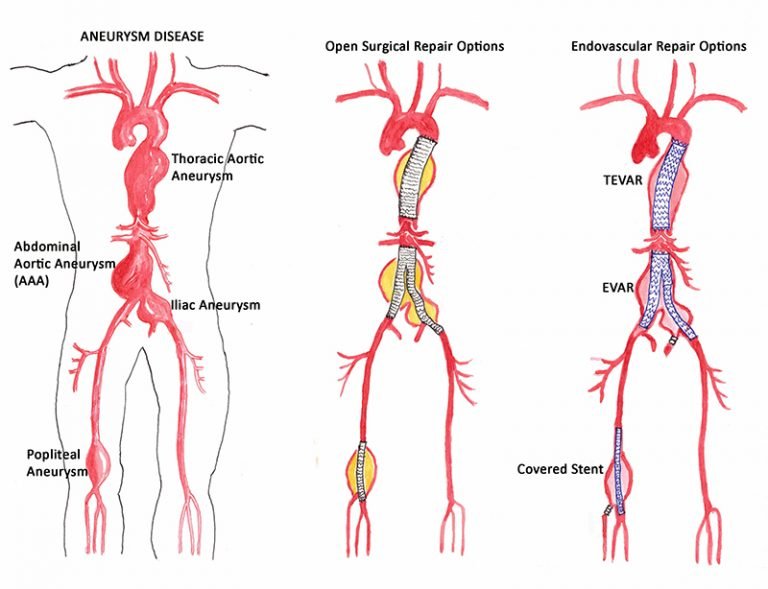
The aorta is the largest artery in the human body. It carries blood from the heart to other parts of the body, delivering oxygenated blood and nutrients to all living tissues. Aortic aneurysm is a serious condition in which the aorta balloons or bulges out due to weakening of the walls of the aorta. If left untreated, an aortic aneurysm can rupture and patients can bleed to death. With treatment from doctors who treat the aorta, who are vascular surgeons, patients have a higher chance of survival especially when the condition is diagnosed and treated early.
Adult patients who have family history of aortic aneurysms may be at increased risk for the condition, and should consider family counselling to determine whether it is advisable to obtain a screening abdominal ultrasound. Aortic aneurysms often do not cause any symptoms (asymptomatic) as they grow bigger, up until impending rupture when it may then cause pain in the chest, abdomen or back. For this reason, it is important to have imaging studies such as an ultrasound scan of the abdomen or CT-scan of the chest or abdomen to diagnose an aortic aneurysm. Any patient who experiences pain in the chest following an injury should go to the emergency room for evaluation; adult patients with known aortic aneurysms who sustain injuries such as those that occur during routine activities, e.g., falls or blunt abdominal trauma should seek prompt medical attention because these seemingly benign events can cause further damage to the wall of the aorta and lead to the aneurysmal enlargement and/or rupture. A ruptured aortic aneurysm can rapidly lead to exsanguination and demise in as little as a few minutes. There are several treatment options available including endovascular repair, open surgical repair, or careful serial monitoring for small aneurysms.

Causes of aortic aneurysms include atherosclerotic degeneration, bacterial infections that cause aortitis (e.g., salmonella), chronic inflammatory diseases such as syphilis or Kawasaki disease, and connective tissue disorders such as Ehlers Danlos Syndrome or Marfan’s Syndrome (both of which affect collagen production). Patients with Turner syndrome may have congenitally weak aortic walls that predispose them to aneurysmal development later in life. Most aneurysms tend to grow slowly over time; and as such most people do not know they have them until they grow significantly big to cause symptoms such as pain in the chest, abdomen or back. Aneurysms are most commonly located in the abdomen or in the chest and smaller ones can also develop in other parts of the body, including the brain and limbs.
A common sign of rapid aneurysmal expansion (and potential rupture) is sudden severe chest, abdominal or back pain that do not get better with time. Other symptoms include fainting, shortness of breath, nausea, vomiting, and coughing up blood (hemoptysis). If any of these symptoms occur after exertional physical activity – such as exercise, sexual intercourse, or coughing, it is important to see the doctor for a proper assessment..
While the exact cause of an aortic aneurysm is unknown, people who smoke and/or have high blood pressure are more likely to develop one. This condition is uncommon in young adults and becomes more common in people who are in their 40s or 50s years of life.
Around 15 percent of people with large abdominal aortic aneurysms (> 5 cm diameter) may progress to rupture in a year if they don’t receive treatment. If it ruptures, less than half of those affected by the rupture will survive the first day; and the majority (90%) die within two weeks if left untreated. The five-year survival rate for this condition is about 50 percent without surgical intervention. Surgical repair can be open vascular surgery which involves removing the weakened section of the artery and replacing it with a synthetic tube, or endovascular (minimally invasive) repair where large covered stents called endografts are used for reconstruction of the aorta from within the vessel.
High-quality vascular specialists are readily available at Pan Asia Surgery, Singapore to help care for patients with artic aneurysms. People who have an abdominal aortic aneurysm can benefit from healthy lifestyle modifications such as: regular exercise for cardiovascular fitness, making sure that they take their medications if they have high blood pressure or high cholesterol, and smoking cessation if they are active smokers. In most cases of rupture, surgery is necessary to save the patient’s life. Doctors at Pan Asia Surgery manage small aortic aneurysm with medications for high blood pressure and/or smoking cessation as well as encouraging healthy diets and regular exercise.Vascular specialists at PanAsia Surgery, Singapore, can readily treat aortic aneurysms surgically. The patient is administered general anaesthesia, which makes the patient sleep through the entire procedure. Special monitoring devices are attached to the patient (e.g., ECGs, continuous blood pressure, and pulse oximeters) for critical monitoring of their condition during surgery. The planned surgical repair is then carried out as counselled with the patient, either an open surgical repair or endovascular repair. Post-operative care is provided at our high-quality hospitals in the High Dependency Unit or Intensive Care Unit immediately after surgery. Patients are then transferred to the ward and eventually discharged home when they have recovered.